“…I have found no better manual than ‘Self-Reliance’ on how, in seven steps, to rebel against a psychogenic epidemic.
Step 1, according to Emerson, is to reclaim your privacy. ‘My life is for itself and not for a spectacle,’ he wrote. ‘I much prefer that I should be of a lower strain, so it be genuine and equal, than that it should be glittering and unsteady.’ Emerson, of course, could have had no conception of the technologies that have enabled our era of uNrestrained sharing, yet those words speak directly to the risk of gaudily advertising ourselves online. The common tendency toward oversharing on social media, especially by young adults, is associated with anxiety, attention seeking, and addiction. So don’t make a spectacle of yourself; respect your own privacy. Stop over-sharing.”[i]—Arthur C. Brooks, The Meaning of Your Life
_____
Truth hurts, sometimes—and that one did, and the rest that followed as I read.
Self-examen: do I overshare/over-post?
Probably…
Am I anxious?
Not especially…
Do I seek attention?
Isn’t that why writers share?
Am I addicted to the sharing/posting/promoting/hoping someone reads?
I don’t like the answer, so I don’t say (as I write, post, and share this too).
What do I do? How do I change? What is my purpose and reason?
“You might think Emerson is arguing that you should abandon any idea of winning the admiration of others. He is not. He simply advocates that you discriminate between what is good and true and everything else. ‘If you are noble, I will love you,’ he wrotes, but ‘if you are not, I will not hurt you and myself by hypocritical attentions.’ In other words, give noble, good people their due, but devote your attention only to what is edifying and uplifiting. That’s step 5: things that are trivial, immoral, or silly—the ridiculous distractions keeping you hooked—are not even worth condemning. You should just eliminate them from your life. Ditch all the empty cultural calories and focus only what nourishes you.”[ii]
That one hurts too. Who, scrolling, distracting, and whatever else hasn’t felt the ridiculous and hook of trivial and silly?
Again and again—and at what cost?
What do I do? How do I change? What is my purpose and reason?
Many times, I’ve taken breaks from social media. I’ve stepped away to work on self and seek to amend the habits and hooks that lead me to spending/wasting too much time.
Always, after a while, I return believing I am better; and I am for a while, but returned to medium of hook, it takes and sets again and the little-time I meant to give amasses into more and more.
What do I do? How do I change?
I still desire to share. I still desire to write—and for my writings to be seen.
I don’t want a crowd, something that feels a fabricated audience. I want souls—unique, defined, and known—that wish to read and be offered new thoughts and writings when they’re there.
Not a crazy spam of denatured, impersonal, post-promotions; but more “I wrote this story, and I liked it. I thought that you might too…Haven’t shared much in a while, here was something that was in me that I tried to catch to share…”
How do you break the mass and social-media addiction? Return to the personal. One-to-one that is true connection and not the false of overshare to masses (even as I write, share, and post this now).
Reading and hit as I was this morning, I feel it right again to take a break and step away; to respect again a privacy, write more from the personal and art that is in me, and not in addiction to overshare.
Ditch all the empty cultural calories and focuses on what nourishes you.
I’ll try again.
Good chance I’ll fail, return again.
But, to ever change, you have to try.
(If you’d like to read, receive personal messages and offered writings when they are there, I would love to share. My email is byronmccoywriting@gmail.com. And if not, and still desire, from time to time to read, writings will still be there, even when I don’t promote: a writer has to write. Thank you for reading, even if I never know.)
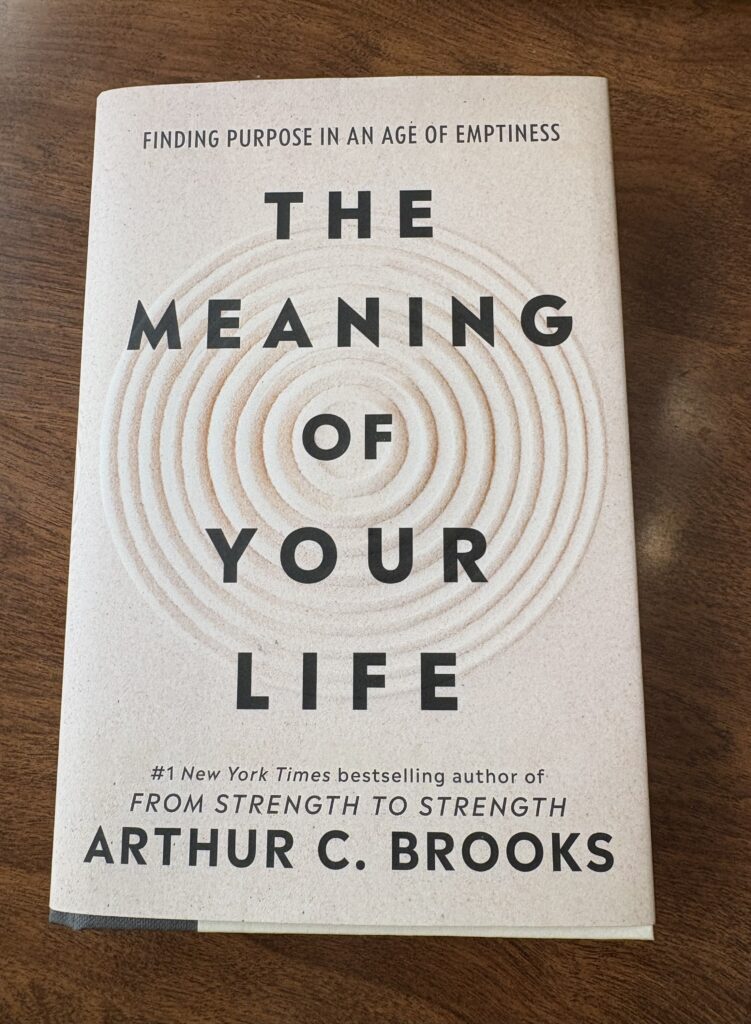
[i] Arthur C. Brooks, The Meaning of Your Life, Ch. “Interrrupt the Doom Loop,” p. 65
[ii] Et. al, p. 67