I’m home earlier than in the past few days. Wheat harvest is started. With that, I leave early and return late. Today, we have run what we can. The next field is too wet, and a storm rolled in.
My son comes out to meet me as the sky above is wild. Driving home, looking to western sky, you saw it—a concentrated cloud, dark-hearted, and wild skies around; wisps of rain from strands of cloud one could barely see aside that streak was where the rain began and showed in origin line from cloud that was barely there. Low clouds sucked high into the darker mass, a steady rise and drawing column like steam to kitchen hood, only it was up and into cloud that began to spiral counter-clockwise.
A tornado warning sounded driving home, and the clouds show all the signs. It is not raining then, just wild-skies, and as Missourians and Midwesterners—near to risk, but still safe, we watch in awed amazement on surreal of storm-sky.
Sometimes that is how it is, some of the most beautiful and wild-witnessings existing at the breaking point of danger.
No tornado touches. We simply stare upon its spiral, focal-concentration into cloud-heart of potential violence. Spiral passes and rain comes after—heavy walled of main front’s arrive letting know the risk of force and chaos in diametric pressures in compete for pre-eminence in heavens above is passed, and we are back to normal storm.
It rains hard, and then it passes, light rain and ethereal skies changing moment to the next, trail of the storm thin-cloud wisps and thicker bands of gray.
“Dad, do you want to play catch?” my youngest son asks.
“I do,” my always answer.
We go to the court, keeping feet mostly dry, and avoid the puddles where earth and concrete have settled and pool until sun dries away.
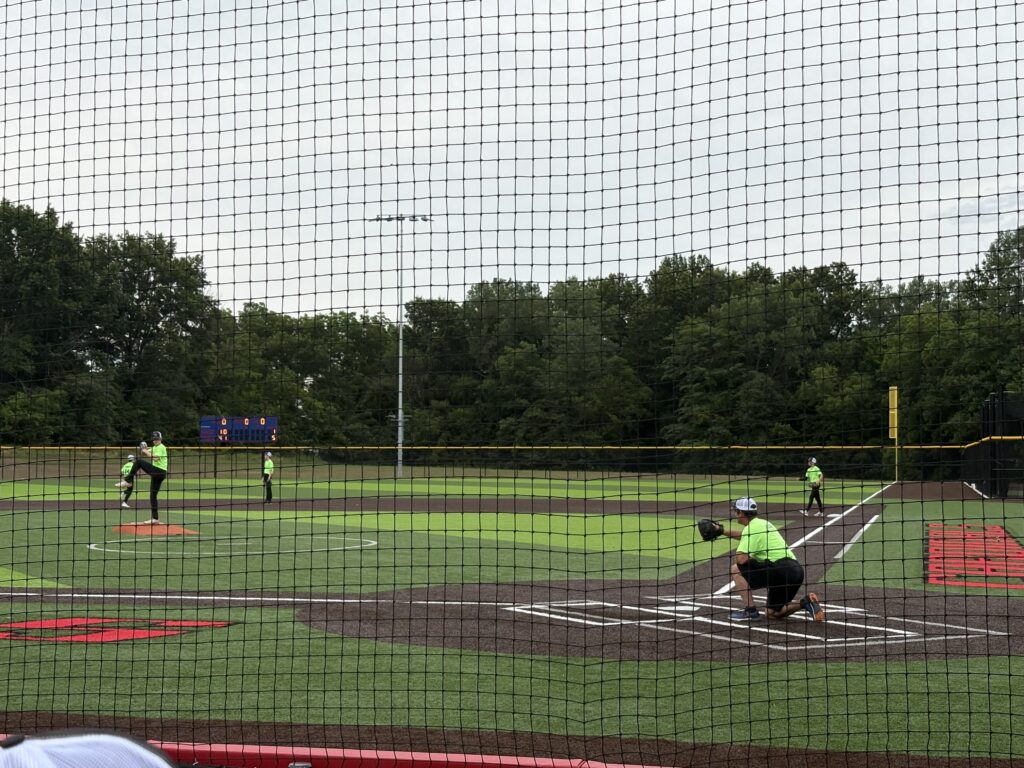
We play catch. He pitches. I catch. I throw pop flies. I roll him grounders—anything he wants to do. I coach some, and let the focus be more for fun (fifteen years into this parenting thing, ten with him, I’m striving to be better at the balance between work and play—in life, work, home, parenting, and all—learning, mostly through failures, that to push too hard for improvement at the cost of fun leads ones to not want to play at all). We’ve been to a Banana Ball game, and he does trick fieldings of ground balls—backwards and through the legs with a dart of a throw back to me.
It’s fun.
“I haven’t seen you in a long time,” he tells me.
“Yeah, it’s been a day,” I answer, having left two mornings in a row before he woke and running harvest until after ten the night before.
“That’s a long time!” he follows up.
That hits me: twenty-four hours from dad in the life of a ten-year old to twenty-four hours from dad to my oldest two, how long I go without seeing my own parents, getting older—and having it settle in more—that the one day comes when we never will again.
Sky drizzles, even in the sun. My eyes are warm and wet as well, but I still see clear.
This is all I want—to love these times, to live these moments, knowing they are special to the both of us.
Twenty-four hours, it’s a long time—even to me—and I miss my family in the harvest seasons when life goes on for everyone, and I feel absent for a while.
But I’m home now. I don’t take it for granted.
It’s a love language that we share: catch in the yard—time—just us. We play until the sky fades and I struggle to see the ball against the twilight clouds.
He’s taken off his shoes and is standing in a puddle.
He is a kid, and he is happy. With him, catch in the yard—time—just us, I am too.
It’s a love language that we share.