In turn of fall and come of summer’s end, he boarded a flight to the west coast where a bus waited and took him to an asphalt tarmac under San Diego sun where, arrived, he was rushed from seat and raced blind into beginning of a new life-chapter.
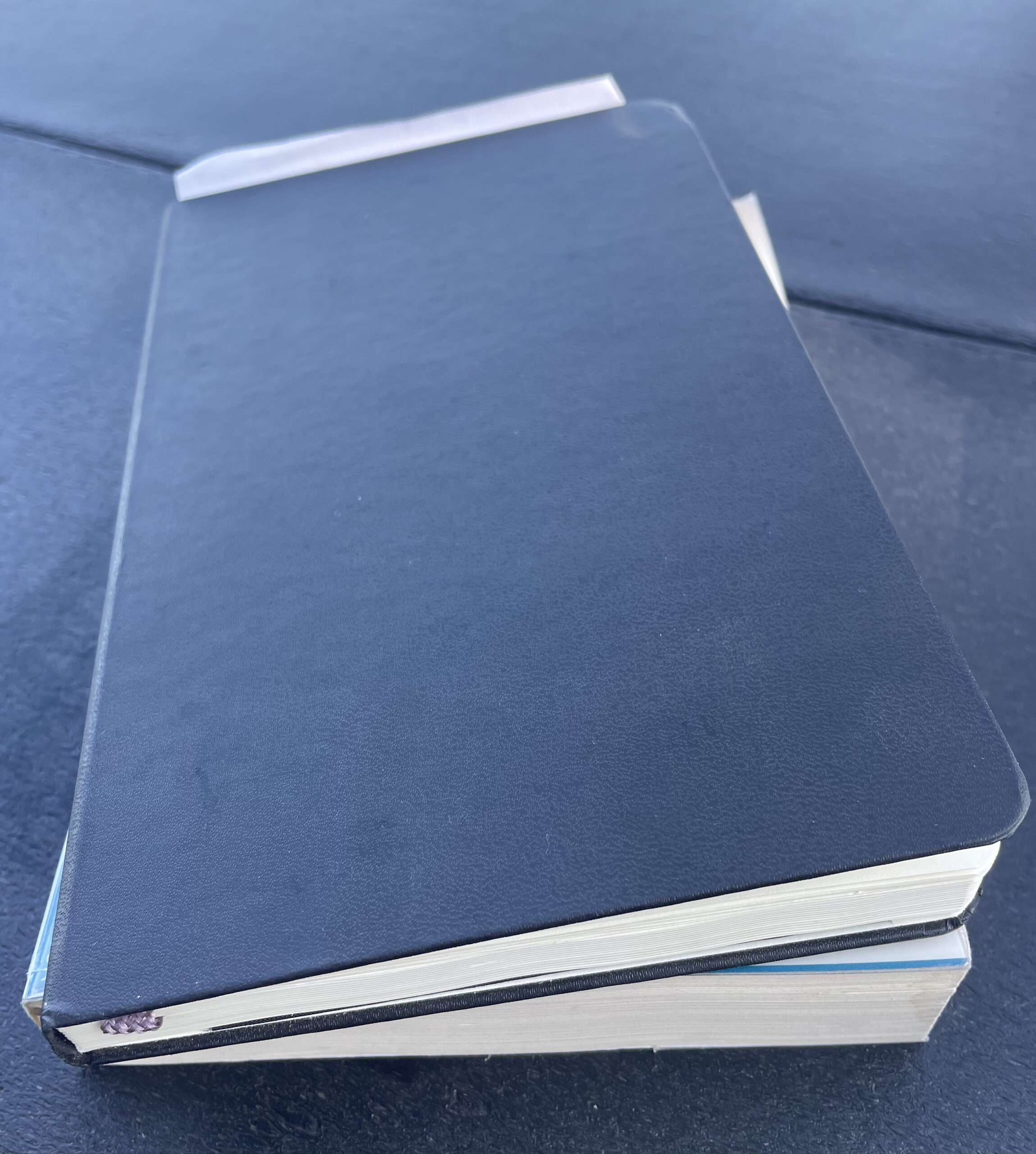
Before departing, she handed him a gift. It was a black leather journal, unwrapped, with a beginning note on first page written in her hand, “For your thoughts,” was all she scribed. He brought it with him and left it unused through fall, winter, and spring.
By anniversary of that Independence night and beginning in an end, he was in a different land, country, and place where in summer before they spoke of a war, by then, they believed might end.
But the war was not ended, only changed, and the easy targets and willing martyrs of before were dead and past.
The enemy was amorphous, bombs instead of beings, and when a martyr showed, it was with enough punch to take as great a mass of infidels as possible before entry to paradise or hell.
There was an up-armored patrol when two vehicles up hit a triple stacked IED of 155 artillery shells intended for a tank. It sent HMMWV and black cloud sky high, and the wreckage spread as shrapnel and hulk, and the next two days were spent picking up pieces of friends to send home for families and closed caskets. It (still) fucked with his mind, and he knew not how to let it free.
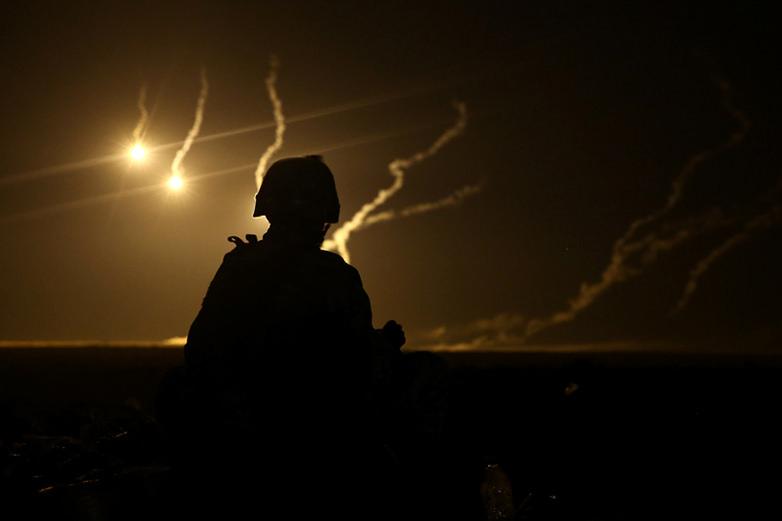
There was a night they were mortared from a position on the far bank of the Euphrates, and they responded dropping illumination rounds into mortars of their own that high in sky popped then slow burned, illuminating land beneath.
It reminded him of the fireworks on night he learned her eyes, and he wondered if it was normal to think of a girl when death attempted minutes before, in mortar’s miss by only meters.
Beneath the illumination rounds, there was no movement, no indication of firing position.
They changed rounds, and in flight, there came the same pop of beginning light before, but there was no visible glow. It was infrared, and to what with eyes shone black, with optics, everything was illumed.
There was movement from a grove of palms, hasty movement to gather and egress, like spectators at a fireworks show trying to beat after-traffic. As the fighters gathered, there was a fast response and fire-for-effect, all mortars dropping, and the position lit like fireworks exploding low overhead and into crowd, and there was no more firing or further threat.
For the rest of the night, he stayed awake, seeing the first dumb stagger and then fast still of the fighters, and the way they found them when they swept and searched the position, returning with the bodies and makeshift mortar firing tube.
He did not like the thought, and he willed his mind to move back to summer before, and he thought on her eyes and tell in her face as lights burst brilliant and safe above.
In time not on patrol, he read a book with title that reminded him of the land in where he went to war. In it, he read a line,
“…a crowd of men, nervous, lusting, restless, half sick with loneliness for women—why, they’ll go anywhere, and particularly will they go home.”[i]
It was then he knew that he was lonely. Lonely, sick, and lusting—just as sentence told—he dreamt of home and her.
In his loneliness, lusting, and restlessness, and having time for thought and contemplations on life, immanent death, and dreams of an eternal—he found the black leather journal she gave to him as gift and, opening, began to write.
He wrote to her.
He wrote his heart, of his hopes and his dreams, all he first began in share to her in summer before. He learned, in writing, he could communicate better, clearer, more precise and boldly all he felt, dreamed, and believed but rarely found when offered spoken. Writing, and from a distance, the words were there, and he felt more close to another than he had in all his life.
Maybe it was less she, but he with whom he fell in love, and by writing to her, discovering his inner voice, he became no longer stranger to himself.
Regardless of romance, it was to her he wrote and in letters from East of Eden, he shared the fullness of his spirit. He wrote without guards. Perhaps times, he shared too much, but a soul new-opened holds recalcitrance to the resurrection of guards, even when there is reason, well and wise, for their placement and presence.
He wrote her his hopes, his dreams, fears and prayers, his wants and lusts that flirted of drawn lines on secrets of summer skin.
Letters and friendship lasted longer than the romance, but when they ended, she left him with a fondness of memory and, too, a gift—a love for writing that would last for all his life.
The gift enabled him to share and give of himself what, spoken, he never gave to world or others. His spirit enriched, and written—shadows, darknesses, and depressions were made less so.
Writing illumed. Writing opened. Writing saved his soul.
The gift gives still, and for the rest of life, he regarded their close same as he once had night and moment of first-fixed gaze, meeting of eyes, and spoken words—beginning opening of one to other—under dazzle and bursts of light: a beginning in an end.
[i] John Steinbeck, East of Eden.